

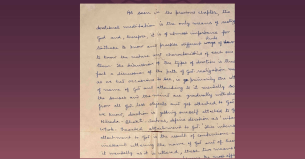
As seen in the previous chapter, the devotional meditation is the only means of realiyeing God and, therefore, it is of utmost importance for the Sadhaka to know and practise different ways of devotion , to know the nature and characteristics of each one of them. The discussion of the types of devotion is thus in fact a discussion of the path of God-realization. Meditation, as we had occasions to see, is primarily the uttering of name of God and attending to it mentally so that the senses and the mind are gradually withdrawn from all god-less objects and get attached to God. As we know, devotion is getting oneself attached to God. Narada – Bhakti Sutras, define devotion as ‘intense, whole-hearted attachment to God’. This intense attachment to God is the result of continuous and incessant uttering the name of God and of hearing it mentally as it is uthered. These two means known as Smarana and Sravana become the most efficacious means of realising God. We shall discuss them together with other types. For the present, it is important to note that devotion or whole hearted attachment to God is possible only if one loves God above all things and remains loyal to Him irrespective of changing circumstances of life. Love and Loyalty, therefore, can be said to be the chief characteristics of any type of devotion. As any emotional attachment, specially that of love is, at least in the beginning, possible in respect of personal God only, it is natural that a sadhaka in his earlier stages, feels attached to Personal God and then gradually as he rises higher and higher passes on to the discussion devotion of the Impersonal God also in this chapter. We shall discuss briefly all the nine types of devotion together with their chief characteristics and show how each one of them contributes in its own way towards the realization of God. We have for the sake of convenience grouped them under three heads, first two consisting of three each and the third of two. 4.101-35, 2.1-31; 3.1-25)
In order that one may enter the spiritual life, it is necessary that he should be initiated into it by some powerful guru, one who has themself realized God. So the very beginning in spiritual life depends upon the hearing of the name of God as imparted by the spiritual teacher, and then again, hearing it continuously till God manifests himself before him and even after that. So Sravana or hearing becomes one of the most important means of realizing God. In empirical sphere also one must either see a thing or hear about it in order to know it ; and more often the hearing generates a desire to know. Hearing as a means of knowledge, is next to seeing only. Here also hearing the name of God, leads the sadhaka to seeing the object it represents i.e., God, who is hidden in it as its meaning. One peculiar characteristic of Sravana is that the hearer becomes one with the meaning of the word heard. The knowledge dawns only when the hearer of the word and the meaning of it meet at one place so intimately that the difference between the two is lost and identity between them is established. God, as the meaning of the word i.e., the name of God, will manifest himself before the devotee who will gradually get assimilated with Him. This will take place only when the name of God is uttered with the help of breaths continuously and heard simultaneously day in and day out. Hearing thus becomes, along with Smarana, a very important means of realisering God and has to be resorted to throughout one’s spiritual career.
Therefore it follows that as a result of continuous remembering of the name of God and hearing of the same mentally, the God, who is the meaning of that name, manifests before the devotee who will feel one with Him. There will thus come about an identity between the sadhaka, who utters and hears the name of God, and God, whose name is uttered and heard , and when this feeling of identity comes to stay for a certain period of time, it is what we call the unitive life or the Samadhi. Since the name as given by the Guru is the symbol of God , remembering and hearing of the same constitute what is called the Nirguna Bhakti and thus Sravana as well as Smarana are necessary not only in the beginning of the spiritual life, but also to the end of it. Whether one is a sadhaka or a sidha , they are both indispensable and have to be resorted to throughout the end of one’s life. Smarana is Saguna Bhakti also. When, as described above, the name of God is heard, it is Nirguna Bhakti, but when one celebrates the glories of God, hears His attributes or reads about His exploits in the scriptures, it is Saguna Bhakti. Even in daily life, to develop attachment and love for some one, one must in one way or other describe and hear his qualities and talk or hear about him. The more the hearing of these qualities, the greater is the possibility of developing attachment to him. Similarly, in order that one may develop love for God, he must listen to His glorious deeds, His qualities of mercy, compassion etc., and should think about Him as often as is possible. This devotion for personal God, will in due course of time, enable one to distinguish between Truth and falsehood and lead him to stick to what is true and abiding. It must be remembered that singing and hearing the name of God includes the hearing of the glories and attributes of God , so that one should resort to, for most of the time, and when one cannot do so any longer, devote his time to the hearing of the scriptures celebrating the greatness of God. Sravana and Smarana go together and as types of devotion clear doubts from the mind, purify it of its dross, produce love for God and consequent disgust for God-less objects, and enable one to find peace in God. In fact, these two are the most out-standing types of devotion and all other types are subsidiary or help to them. Sravana is both Saguna and Nirguna Bhakti, but Smarana is Nirguna Bhakti alone.
… of God. So we have constructive formering kirtana one … say anything approach and should never to which is likely to shake their faith. He should not of faith and then make use of their present mode higher truths gradually lead them to higher and beliefs give up the which will automatically make If the erroneous this manner glory of God is sung in unison melodious voice and so forth . with love and enthusiasm, in there is no doubt and with sweet musical instruments Kirtana will generate love for that such an will purify their God in the minds of the people, Godwards , and lead them. God is very fond of Kirtana and is said to jump as if from above into the assembly of such devotees as engage themselves in singing His glories. Thus Kirtana gives a great spur.
In celebrating the glories of God , one can resort to Kirtana also, being a great aid to the spiritual progress of an aspirant. It consists of narrating the glories of God, singing and extolling the attributes of God and thus diverting the minds of the people towards God. As it is performed in the presence of a number of persons collected at one place for the purpose of devotion , one who performs Kirtana can create an atmosphere where all those present will feel the warmth of God-love and thus feel a thirst for spiritual life. The Kirtana if performed with a view to earn one’s livelihood or for amassing wealth in return of it or again for pleasing the people present by music — vocal or instrumental — and by descriptions of women, it will do more than good to the cause of spiritual life. It should therefore be remembered that as a type of devotion, Kirtana is to be performed with the sole aim of increasing devotion and love for God and so in no case, women and wealth, which are two great obstacles in the path of God, are to be allowed in the performance. Another caution in connection with the Kirtana is that while performing it in a temple before the image of God, one should so perform it that people would begin feeling love and regard for the personality of God. To belittle Saguna devotion in such assemblies will prove harmful in two ways. Those who have a love for Saguna God will be shocked as their faith is likely to be shaken. In either case, the purpose of Kirtana is defeated. Secondly, those who do not want to do anything will seek excuse and get away from the path. They will give up Saguna Bhakti saying that God is Nirguna and so it is foolish to worship him in that way , but when the question of Nirguna devotion comes, he, being ignorant of the mode of Nirguna Bhakti, can do nothing and is, therefore, lost both ways. Nirguna worship he knows not, Saguna worship he likes not—the result is that he falls away from the path.